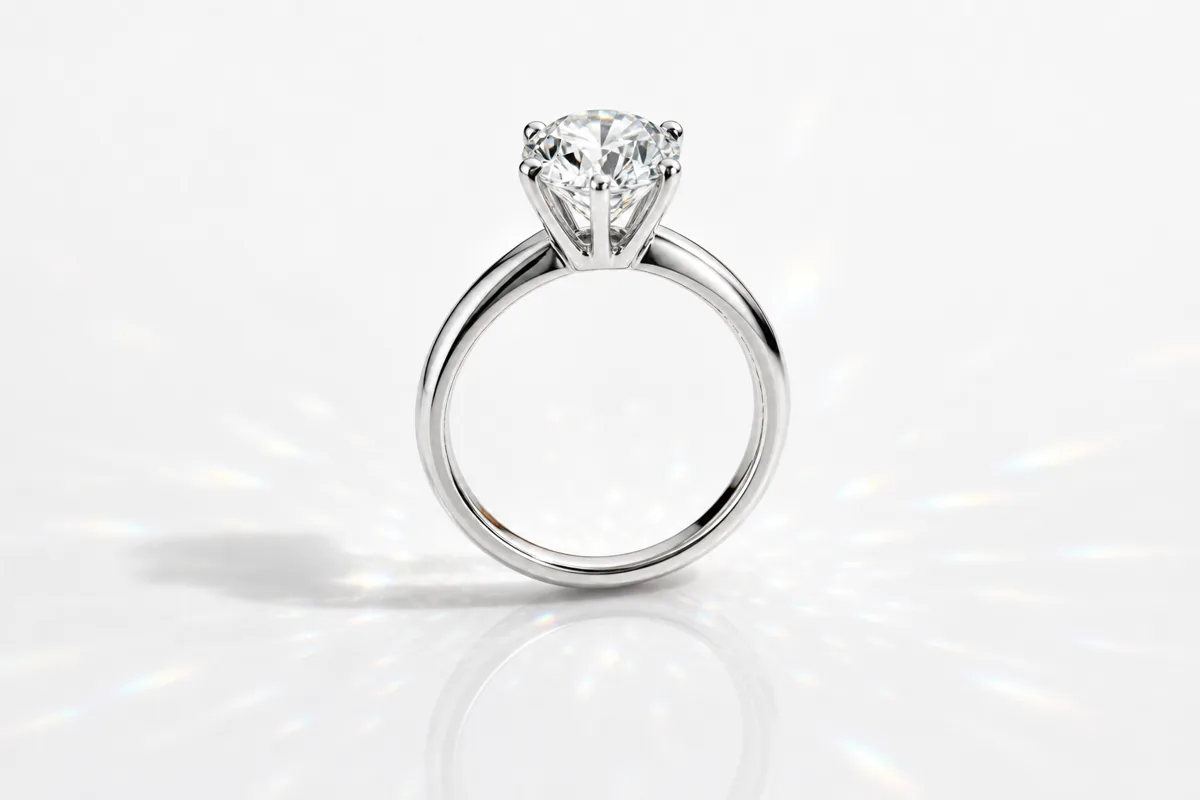
Why insure a ring separately
Standard household contents cover often caps individual item claims or excludes jewellery away from home. A ring is worn out and about, where loss and theft risk is highest. That is why most people specify the ring on the policy or take dedicated jewellery cover, so it is protected at its real value wherever it is.
What insurers need from you
Insurers want a recent valuation that states replacement value, ideally tied to a grading certificate. Without it, you risk being paid less than the ring is worth at claim time, or paying premiums on a guessed figure. A dated, signed valuation matching the certificate is the document that protects you.
What cover costs
Jewellery insurance is usually priced as a small annual percentage of the insured value, varying by insurer, location, and whether the ring is worn daily. The bigger cost is getting the value wrong. Underinsure and you are short at claim time. Overinsure and you pay premiums on an inflated figure. An accurate valuation is the control point.
Getting the valuation right
Use an independent, qualified valuation based on the certificate and the actual stone, and review it every few years as prices move. Prodiam offers diamond-ring valuation in Johannesburg, working from the certificate and stone with a cutting works behind it, so the replacement figure your insurer relies on reflects the real market rather than a round-number guess.
Decision table
Use the details, not a shortcut.
| Approach | Result | Risk |
|---|---|---|
| No separate cover | Ring may be excluded or capped | Large uninsured loss |
| Specified item, accurate valuation | Paid real value at claim | Lowest risk |
| Insured on a guessed value | Over or under paid | Wasted premium or shortfall |
Direct answers
Common questions
Do I need a valuation to insure a diamond ring in South Africa?
Almost always. Insurers want a recent valuation stating replacement value, ideally tied to a grading certificate, so you are paid the ring's true worth at claim time.
How much does it cost to insure a diamond ring?
Usually a small annual percentage of the insured value, varying by insurer and circumstances. The main cost risk is an inaccurate valuation, not the premium itself.
How often should I revalue my ring?
Every few years, or sooner if diamond prices move, so your cover keeps pace with replacement cost. Prodiam can provide a certificate-based valuation in Johannesburg.