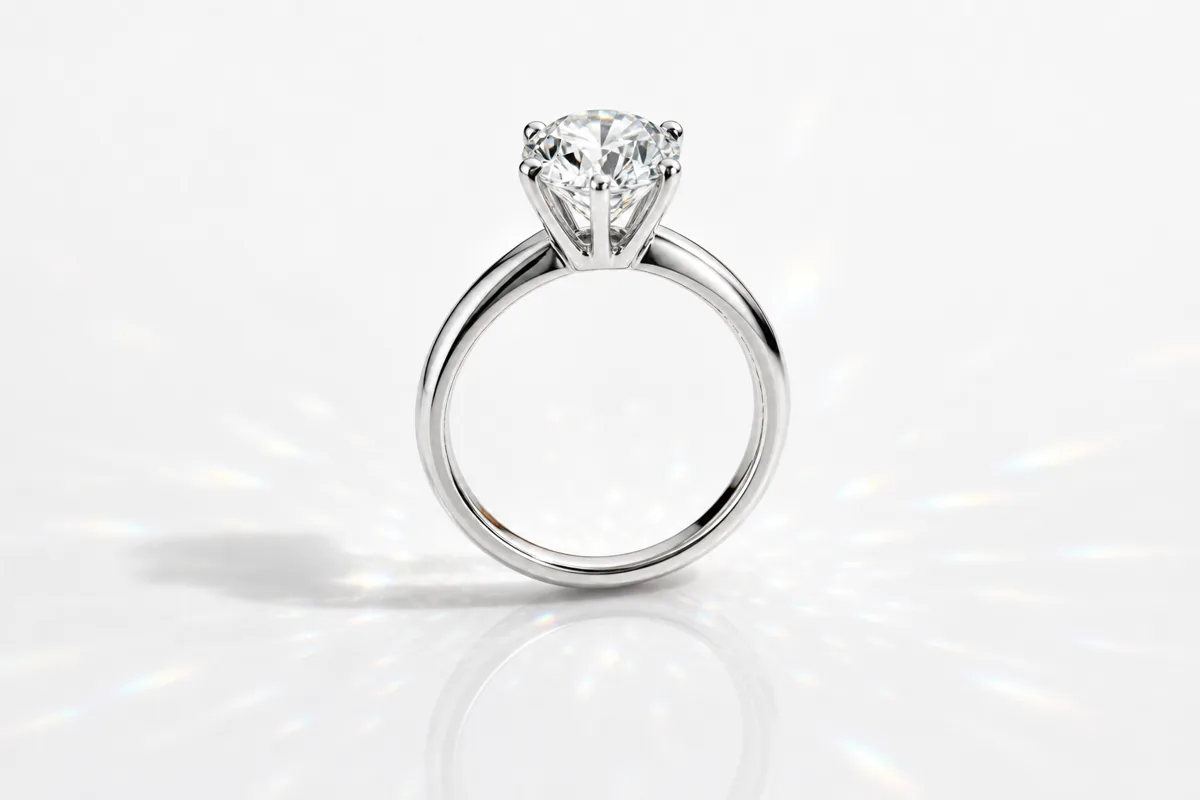
The buying shape
Most engagement-ring decisions start with style, then quickly become questions about centre-stone quality, budget, metal, shape, and whether natural or lab-grown makes sense.
The buyer sequence
Choose the centre-stone shape, set a 4Cs priority, confirm the certificate, check the ring build, and compare the finished ring against realistic future resale value.
Natural versus lab-grown intent
Lab-grown searches are high. The page should acknowledge them without pretending Prodiam is a lab-grown retailer. Readers comparing lab-grown and natural stones need a clear explanation of long-term value and disclosure.
Decision table
Use the details, not a shortcut.
| Decision | What to ask | Why it matters |
|---|---|---|
| Natural or lab-grown | Is it disclosed clearly? | Resale expectations differ |
| White gold or platinum | Will the metal show colour tint? | Metal changes how colour is perceived |
| Solitaire or multi-stone | Which diamond carries the value? | Small stones are assessed differently |
| Shape | Does the shape suit the hand and budget? | Fancy shapes need careful inspection |
| Certificate | Can the report be verified? | Trust starts with matching paper to stone |
Direct answers
Common questions
Is a solitaire still the safest engagement-ring style?
It is the easiest style to compare because the centre diamond carries most of the value and visual impact.
Should I buy lab-grown or natural?
That depends on budget and priorities. Natural diamonds usually remain the better fit for buyers who care about tradeability and long-term value.
Can Prodiam help with engagement rings?
Prodiam can assist with certified natural diamond conversations and estate jewellery by appointment.