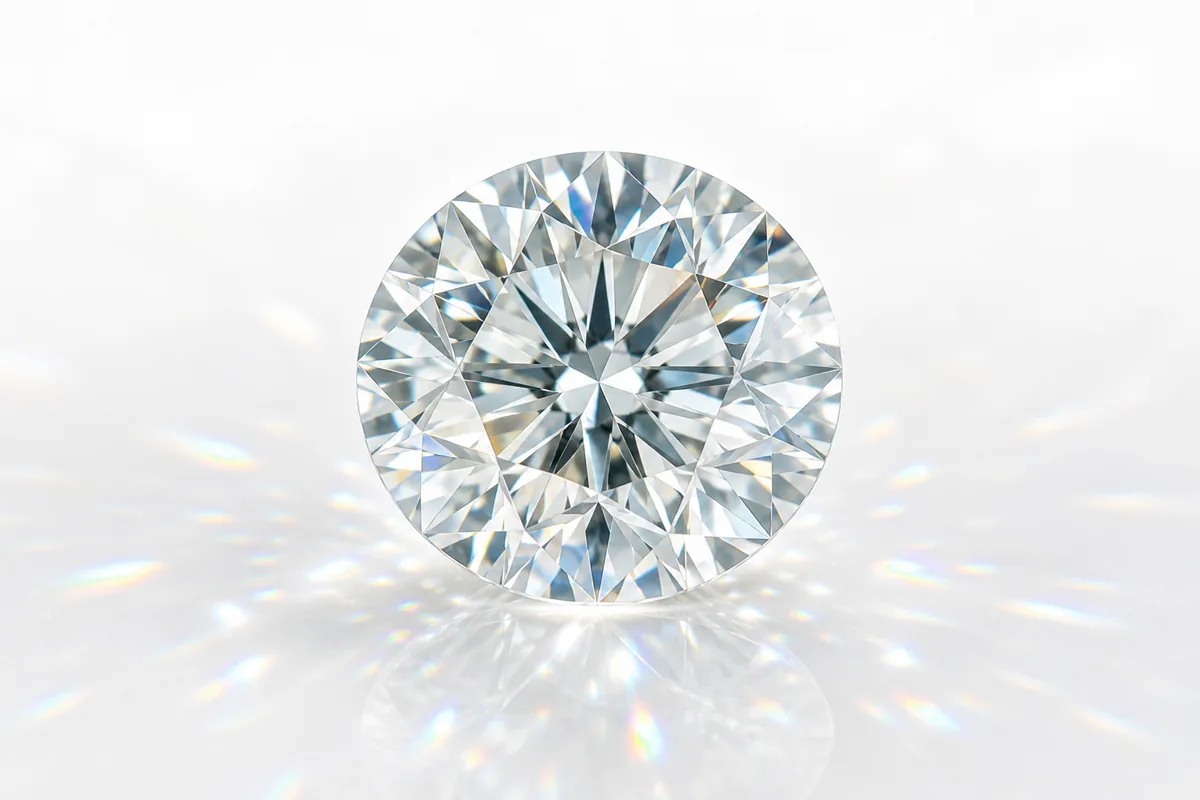
What is actually different
A natural diamond formed over a billion years deep in the earth and was mined. A lab-grown diamond was made in a few weeks in a reactor. Both are real carbon crystal, both can be GIA-graded, and a jeweller cannot tell them apart by eye. The difference is not quality on the day you buy. It is scarcity, and scarcity is what holds price.
The real price gap
Lab-grown diamonds now cost roughly 80 to 90 percent less than a natural stone of the same spec on the day of purchase, and that gap is still falling. That is a genuine advantage if your priority is the biggest look for the lowest spend right now. The catch is that lab-grown prices have been falling year on year as production scales, so the gap keeps widening in the lab-grown buyer's favour at purchase and against them at resale.
Value over time
Natural diamonds are finite, so they hold resale value far better. Lab-grown diamonds can be produced without limit, so their second-hand value is weak and still dropping. If the ring is a keepsake or heirloom you want to retain worth, natural wins. If it is a fashion piece or a stepping-stone ring, lab-grown can make sense.
How to choose
Decide what the ring is for. Maximum size on a tight budget, with no plan to resell, points to lab-grown. A lasting symbol that should hold value and can be insured and traded later points to natural. Prodiam works in natural certified diamonds, cut in-house, so a buyer who wants the heirloom-grade route can match a GIA certificate to a real stone and buy close to source rather than at mall margin.
Decision table
Use the details, not a shortcut.
| Factor | Natural diamond | Lab-grown diamond |
|---|---|---|
| Upfront price | Higher | 80 to 90 percent lower, still falling |
| Resale value | Holds, finite supply | Weak, supply unlimited |
| Rarity | Billion-year, finite | Made on demand |
| Best for | Heirloom, store of value | Maximum size, lowest spend |
Direct answers
Common questions
Are lab-grown diamonds real diamonds?
Yes. They are real diamond crystal, chemically and optically the same as natural. The difference is that they are made in a reactor rather than mined, which affects rarity and resale value, not whether they are real.
Is a lab-grown diamond cheaper than natural?
Usually 80 to 90 percent cheaper for the same spec at purchase, and still falling. But lab-grown prices keep dropping and resale value is weak, so the saving is mostly upfront.
Which should I buy for an engagement ring?
If you want maximum size for the lowest spend, lab-grown. If you want a stone that holds value and can be insured and traded later, natural. Prodiam supplies natural certified diamonds direct from a cutting works.