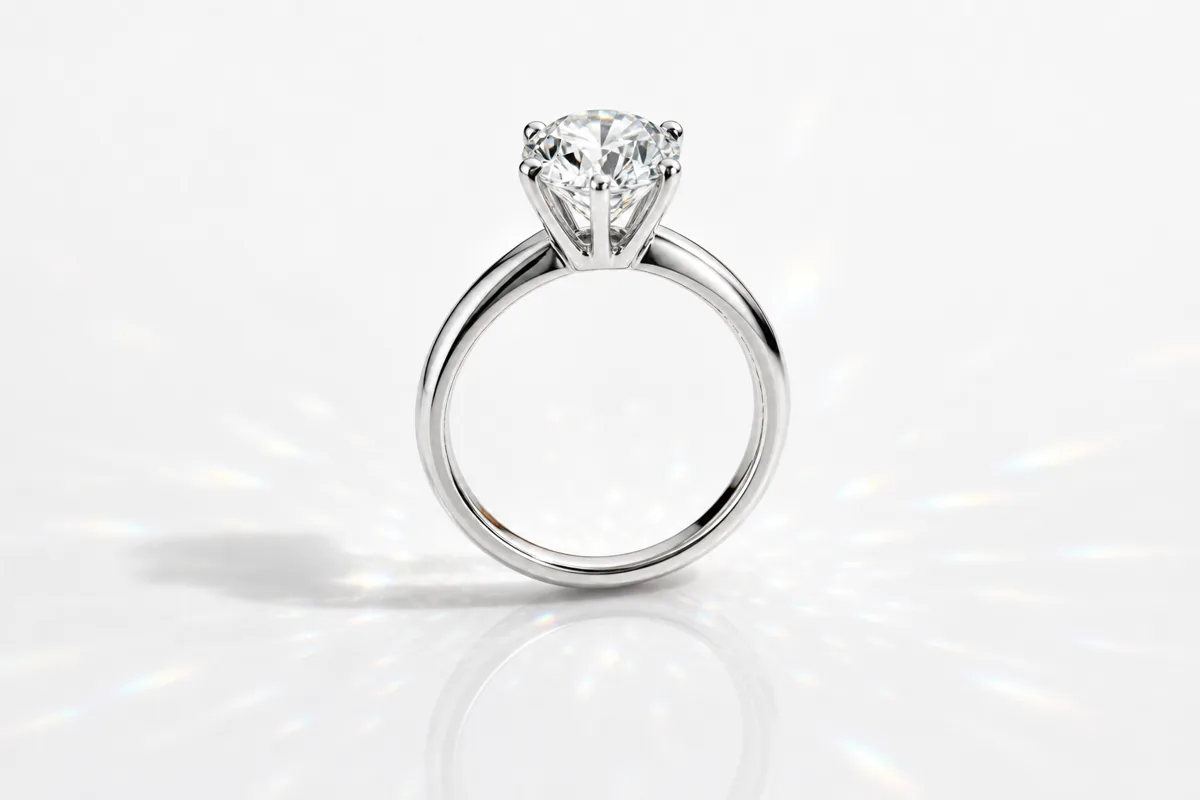
The three most common ring repairs
Loose stones usually come from worn or bent prongs that no longer hold the girdle securely. The stone needs re-tipping or full re-clawing before it can be worn safely. Worn shanks thin over years of daily wear and can crack or break. A shank repair or replacement restores structural integrity. Bent or broken prongs expose the girdle and increase the risk of chipping a facet edge, which has permanent consequences for the stone's value.
When to repair versus when to reset
Repair makes sense when the setting style is right, the damage is mechanical, and the mount is otherwise sound. A single worn prong on a solitaire is a repair. A ring where multiple prongs have worn, the shank is thin throughout, and the design no longer suits the wearer is a reset candidate. A bench assessment gives you the honest picture before committing to either.
What stone security means before any work begins
Before the setting is touched, the stone should be examined under magnification. Any existing chip on the girdle edge, a feather near the surface, or a weakened facet changes how the stone should be handled during setting work. A stone with compromised integrity at the girdle is at greater risk during re-tipping than a clean stone. Skipping this step puts the diamond at unnecessary risk.
Prodiam's bench: stone assessment and setting work on certified natural diamonds
Prodiam manufactures jewellery through a South African cutting works in Bedfordview. The bench handles certified natural diamonds and can assess stone security, inspect the girdle and facets, and advise on whether repair or reset is the right call. Sister company a South African cutting works handles broken-set stones. Prodiam's scope is the diamond component and setting work on certified natural stones. For general high-street repairs on fashion pieces or silver, a local jeweller is likely more appropriate. For a certified natural diamond ring where the stone's integrity matters, contact: Prodiam.
Decision table
Use the details, not a shortcut.
| Damage type | Urgency | Recommended first step |
|---|---|---|
| Loose stone (moves in setting) | High. Stop wearing immediately | Bench inspection, re-tip or re-claw prongs |
| Worn prongs (flat or thin) | Medium to high | Assess all prongs, re-tip where needed |
| Bent or broken prong | High. Girdle exposed | Bench assessment, repair or full re-claw |
| Thin or cracked shank | Medium. Increases distortion risk | Shank repair or replacement |
| Scratched or worn surface | Low | Polish and clean at next service |
Direct answers
Common questions
What should I do if my diamond feels loose in its setting?
Stop wearing the ring immediately. A loose stone can fall out and be lost. Take it to a bench for inspection and prong assessment before wearing it again.
How often should prongs be checked?
Once a year is a reasonable interval for a ring worn daily. Prongs wear at different rates depending on metal type, prong thickness, and how the ring is worn.
Does re-tipping prongs affect the diamond?
Done correctly by an experienced bench, re-tipping does not damage the stone. The stone is inspected first. If the girdle has any existing chips or weakness, the setter works to minimise pressure on that area.
Can a cracked shank be repaired without resetting the stone?
Usually yes. A shank repair or replacement is typically done without disturbing the stone if the setting area is intact. The bench assesses whether the setting claws need attention at the same time.
Is Prodiam a general ring repair shop?
No. Prodiam's bench focuses on certified natural diamonds and setting work connected to stone assessment. For fashion jewellery, silver, or general repairs, a local high-street jeweller is more suitable.
Can Prodiam assess a stone that came out of a broken setting?
Yes. a South African cutting works, Prodiam's sister company, handles broken-set stones. The stone is inspected for damage before any new setting work is considered.